How to Choose the Right Dog Door Size
One of the things that sets Hale Pet Door apart from its competitors is the wide variety of standard sizes we offer to fit almost any animal and almost any application. Many pet door companies only offer small, medium, and large sizes, but we have 11 standard sizes that are designed to work with not only the size of your pet but also the size of the installation location.
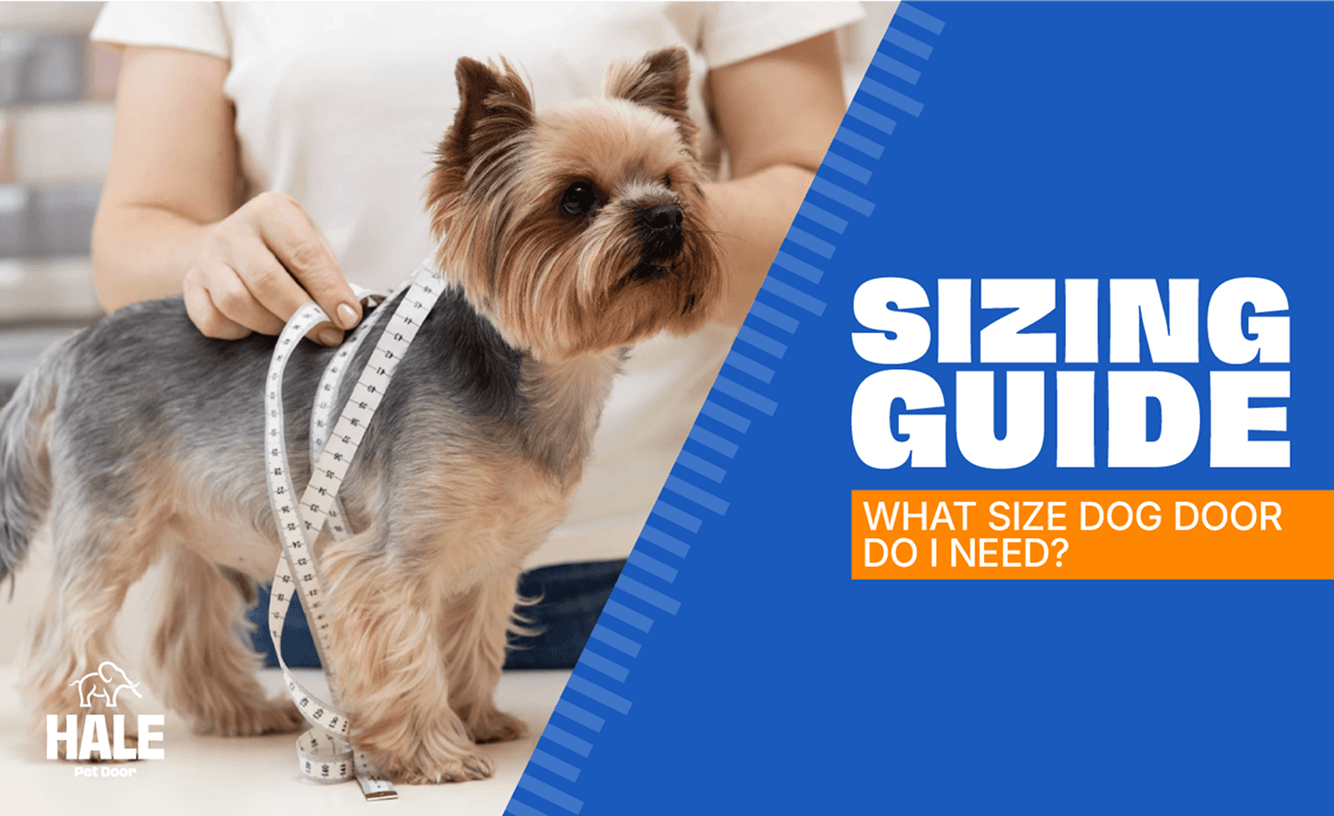

Measure from ground to top of your pet's shoulder
The pet door flaps should be at least an inch or two above the top of your pet's back, not the head. To get this height, measure your pet from the withers (top of the shoulders) to the floor. Remember that your door won't be placed completely at floor level. If you have more than one animal, measure the tallest one. If you have trouble getting your dog to stand still to be measured, you can try standing next to your dog, placing your fingers level with their shoulders on your leg, and then measuring from the floor to that spot on your leg.

Facing your pet, measure across their chest
This is the easy one. Simply measure your pet at the widest point and add an inch or two for safety. If your pet is long-haired, don't forget that this may make them appear wider than they really are. Alternatively, you can open a door just wide enough for your pet to pass through and measure the width of the opening, again adding an inch or two for safety.

Don't forget to measure the step-over or 'rise' (for panel models)
The rise is the lip at the bottom of the door that the pet must step over to use the door. This measurement is generally only applicable for panel models that come with a built-in rise. If you have a short-legged dog or an older dog that can't lift its feet very high, or if the door is installed with a step on either side, consider ordering a "no rise" door. Our standard rise on panel models is 5" or 10".
Standard Dog Door Size Chart
From "Small" to "Giant," our 11 standard sizes work for most situations. Measurements are listed as width x height.
| Size | Passage Opening | Rough Opening | Tip to Tip | Pet Width | Pet Shoulder Height | Pet Weight |
|---|---|---|---|---|---|---|
| Small Medium | 6 1/2" x 9 1/2" | 8 1/2" x 11 1/2" | 9 9/16" x 12 9/16" | Up to 4" | 9"-13" | Small cats up to 10 lbs. |
| Tall Small Medium | 6 1/2" x 12 1/2" | 8 1/2" x 14 1/2" | 9 9/16" x 15 3/8" | 3"-5" | 12"-15" | Small, tall dogs (12-25 lbs.). |
| Medium | 8 1/2" x 12 1/2" | 10 1/2" x 14 1/2" | 11 9/16" x 15 3/8" | 6"-8" | 12"-15" | Dogs 10-35 lbs. |
| Tall Medium | 8 1/2" x 16" | 10 1/2" x 18" | 11 9/16" x 19 1/16" | 6"-8" | 15"-20" | Tall dogs 30-45 lbs. |
| Large | 11" x 16" | 13" x 18" | 14 1/16" x 19 1/16" | 8"-10" | 15"-20" | Dogs 40-55 lbs. |
| Tall Large | 11" x 19 1/2" | 13" x 21 5/8" | 14 1/16" x 22 9/16" | 8"-10" | 21"-24" | Taller dogs 50-95 lbs. |
| Tall Large Plus | 11" x 23 1/2" | 13" x 25 5/8" | 14 1/16" x 26 9/16" | 8"-10" | 25"-27" | Tall, slender dogs up to 110 lbs. |
| Extra Tall Large | 11" x 27 1/2" | 13" x 29 5/8" | 14 1/16" x 30 9/16" | 8"-10" | 24"-31" | Very tall, slender dogs up to 120 lbs. |
| Extra Large | 14" x 19 1/2" | 16" x 21 5/8" | 17 1/16" x 22 9/16" | 11"-13" | 22"-24" | Large dogs up to 120 lbs. |
| Extra Large Plus | 14" x 23 1/2" | 16" x 25 5/8" | 17 1/16" x 26 9/16" | 11"-13" | 25"-27" | Larger dogs up to 150 lbs. |
| Giant | 15 1/2" x 27 1/2" | 17 5/8" x 29 5/8" | 18 9/16" x 30 9/16" | 12"-14" | 25"-31" | Most giant breeds. |
Small Medium
Small cats up to 10 lbs.Tall Small Medium
Small, tall dogs (12-25 lbs.).Medium
Dogs 10-35 lbs.Tall Medium
Tall dogs 30-45 lbs.Large
Dogs 40-55 lbs.Tall Large
Taller dogs 50-95 lbs.Tall Large Plus
Tall, slender dogs up to 110 lbs.Extra Tall Large
Very tall, slender dogs up to 120 lbs.Extra Large
Large dogs up to 120 lbs.Extra Large Plus
Larger dogs up to 150 lbs.Giant
Most giant breeds.
When Measuring Your Dog, Don't Forget…

A puppy will grow!
Make sure you get a door that your pet will always be able to use. If you currently have a kitten or puppy, remember that they will grow.
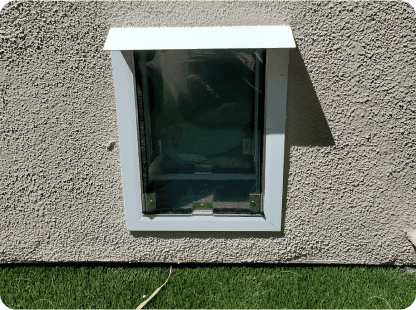
Mount the door at a comfortable height
Young pets can raise their legs up to their chest, but older pets may have trouble with this.
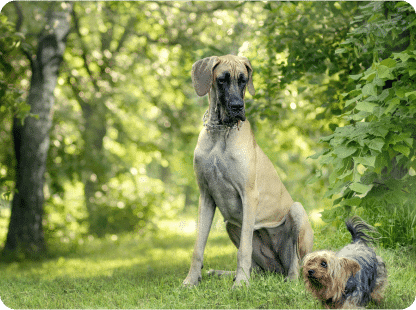
Make sure the pet door is tall enough
Hunching over can be hard on your pet's hips, especially as they age. And the flaps on your door will last longer if your pet isn't rubbing against the top of the door as they pass through.
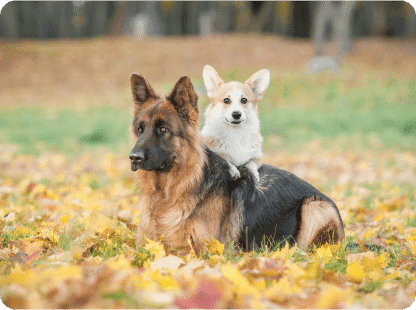
Need a door for multiple pets?
If you have more than one pet, make sure you get a door that will work for all of them: low enough for the shortest one to step over but tall enough for the tallest one to fit through comfortably.
Access from both sides of your pet door
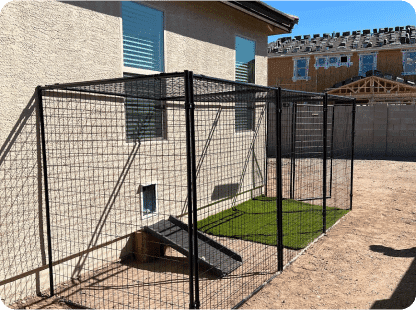
Please take into account how your pet will have to get through the door, especially if there are steps or if you have baseboards 3" or 6". Panel models have a standard rise of 5" but can be ordered with no rise.

Standard-size pet doors are taller than they are wide
Some dogs (i.e., bulldogs) may need more width but not as much height. In those instances, you can order a custom size so you aren't getting a taller pet door than needed.